2 days ago
5 days ago
1 week ago
1 week ago
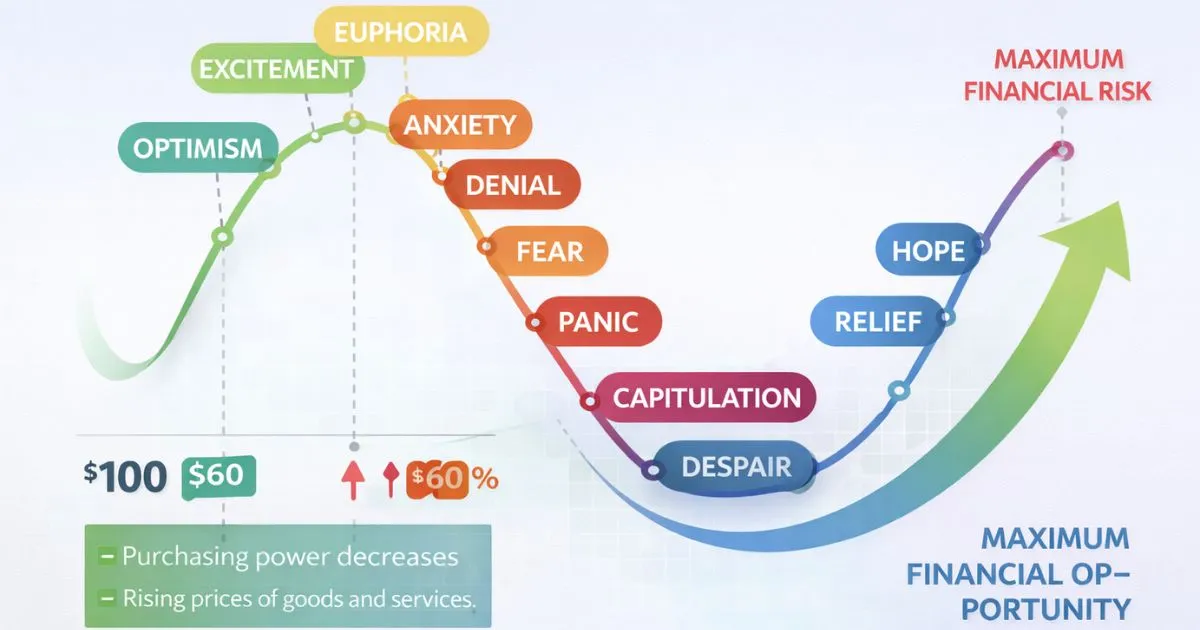
In the world of investing, your greatest enemy isn't a bad company or a falling index—it's your own brain. When the market turns red in 2026, a biological "fight or flight" response kicks in, leading many to panic sell. Understanding why this happens is the first step to becoming a successful, wealthy investor.
Our brains are wired for survival, not for the 21st-century stock market. When we see our portfolio value drop, the amygdala (the brain's fear center) sounds an alarm. This triggers "Loss Aversion"—a psychological phenomenon where the pain of losing ₹10,000 feels twice as powerful as the joy of gaining ₹10,000.
To stop the "pain," our instinct is to sell everything immediately. This often happens at the very bottom of the market, right before a recovery begins.
Herd Mentality: We feel safer doing what everyone else is doing. If the news says "everyone is selling," our brain tells us we should too.
Recentcy Bias: We mistakenly believe that because the market fell yesterday and today, it will definitely fall tomorrow.
Confirmation Bias: Once we are scared, we only look for news that justifies our fear, ignoring the positive long-term signs.
History shows that the market moves in cycles. In 2026, the most successful investors aren't the ones with the best software; they are the ones with the most emotional discipline.
When you sell in a panic, you turn a "paper loss" (a temporary drop in value) into a "real loss" (money gone forever). By staying calm, you allow your investments the time they need to bounce back and grow.
The 24-Hour Rule: Never sell on the same day the market crashes. Sleep on it.
Focus on 'Why': Ask yourself, "Has the business actually changed, or is it just the price?"
Automate Your Investing: Use Systematic Investment Plans (SIPs). When you don't have to "click a button" to buy, your emotions stay out of the way.
Insights based on Behavioral Finance studies from the CFA Institute and historical market data from the Bombay Stock Exchange (BSE) 2026. https://www.bseindia.com/
3 hours ago
3 hours ago
14 hours ago