2 weeks ago
3 weeks ago
3 weeks ago
4 weeks ago
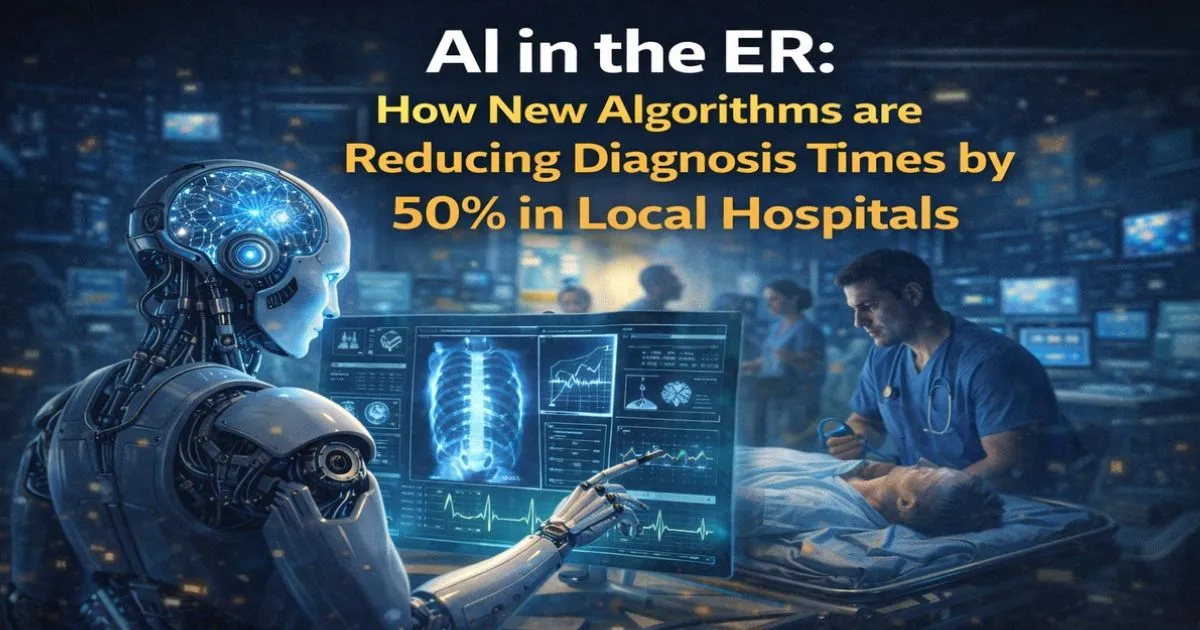
In a busy Emergency Room (ER), every second is a battle against the clock. By January 2026, a major shift has occurred in our local hospitals. New Artificial Intelligence (AI) algorithms are now assisting doctors to diagnose critical conditions like strokes, heart attacks, and internal bleeding 50% faster than just two years ago.
Think of AI as a super-fast assistant that never gets tired. Here is how it’s changing the ER experience:
Instant Scans: When a patient gets an X-ray or CT scan, the AI reviews the image in seconds. If it spots a life-threatening issue (like a brain clot), it instantly moves that patient to the top of the doctor's list.
Smart Triage: Instead of waiting in a long queue, AI "Triage" tools analyze a patient's vitals (heart rate, oxygen, symptoms) immediately to decide who needs to see a doctor first.
Predicting the Future: Advanced models can now predict if a patient will need to be admitted to the hospital hours before a doctor even makes the final call, helping the hospital prepare a bed in advance.
| Feature | Without AI (Old Way) | With AI (2026 Way) |
| Stroke Detection Time | 60 - 90 Minutes | Under 20 Minutes |
| ER Wait Times | 4 - 6 Hours | Reduced by 40-50% |
| Diagnostic Accuracy | High (but human error exists) | 95%+ (AI flags subtle signs) |
| Doctor Burnout | Very High (Overloaded) | Lower (AI handles routine tasks) |
It is important to remember that AI is not replacing our doctors. Instead, it is removing the "boring" paperwork and the wait times, allowing surgeons and nurses to focus on what they do best: saving lives. "AI doesn't make the final decision—it just makes sure I have the information I need twice as fast," says a Lead Trauma Surgeon at a local hospital.
2 weeks ago
2 weeks ago
2 weeks ago