2 weeks ago
3 weeks ago
3 weeks ago
4 weeks ago
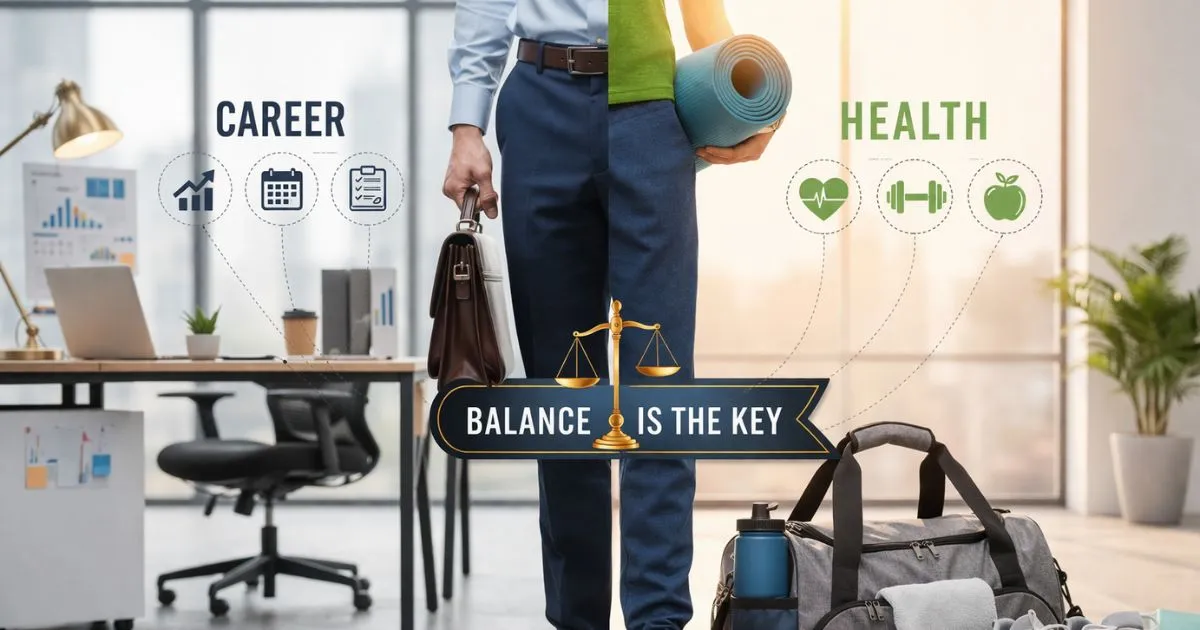
In 2026, the "hustle culture" of the past has been replaced by "Sustainable Productivity." For the average 9-to-5 professional, the biggest hurdle to fitness isn't a lack of desire, but a lack of energy and structure. Between morning commutes and end-of-day exhaustion, finding time for the gym can feel like a second job. However, building a routine is less about "finding" time and more about "designing" it.
The most successful office athletes in 2026 use a psychological trick called Habit Stacking. You attach your workout to an existing anchor in your day.
Example: "After I close my laptop at 5:00 PM, I immediately put on my running shoes."
Why it works: It removes the "decision fatigue" of wondering if you should work out or sit on the couch.
If your job is unpredictable with late-evening meetings, the morning is your safest bet. Research shows that exercising before 9:00 AM increases mental clarity for the workday.
Strategy: Lay out your gym clothes the night before. This "frictionless" start saves you 10 minutes of searching for socks in the dark.
In 2026, the 60-minute gym session is no longer the only way to get fit. Micro-workouts—15 to 20 minutes of high-intensity movement—can be done during lunch breaks or right before your commute.
Key Tip: Three 20-minute sessions per week are more effective for consistency than one 2-hour session on Sunday.
Never go home first. For 9-to-5 workers, the "couch magnet" is real. Once you sit down and turn on the TV, the workout is effectively over.
The Rule: Pack your gym bag and keep it in your car or under your desk. Go straight from the office to the gym.
If the gym feels impossible, change how you work. Walking meetings and standing desks are corporate staples in 2026.
Calculation: Walking for 10 minutes during your lunch break adds up to 50 minutes of cardio per week—nearly an hour of "invisible" exercise.
Don't aim for perfection. Aim for The Rule of Two: Never miss more than two days in a row. This keeps the momentum alive even during busy project weeks.
Guidelines based on the Journal of Occupational Health Psychology (2026) and WHO Global Action Plan on Physical Activity. https://www.who.int/news-room/fact-sheets/detail/physical-activity
2 weeks ago
2 weeks ago
2 weeks ago