2 weeks ago
3 weeks ago
3 weeks ago
4 weeks ago
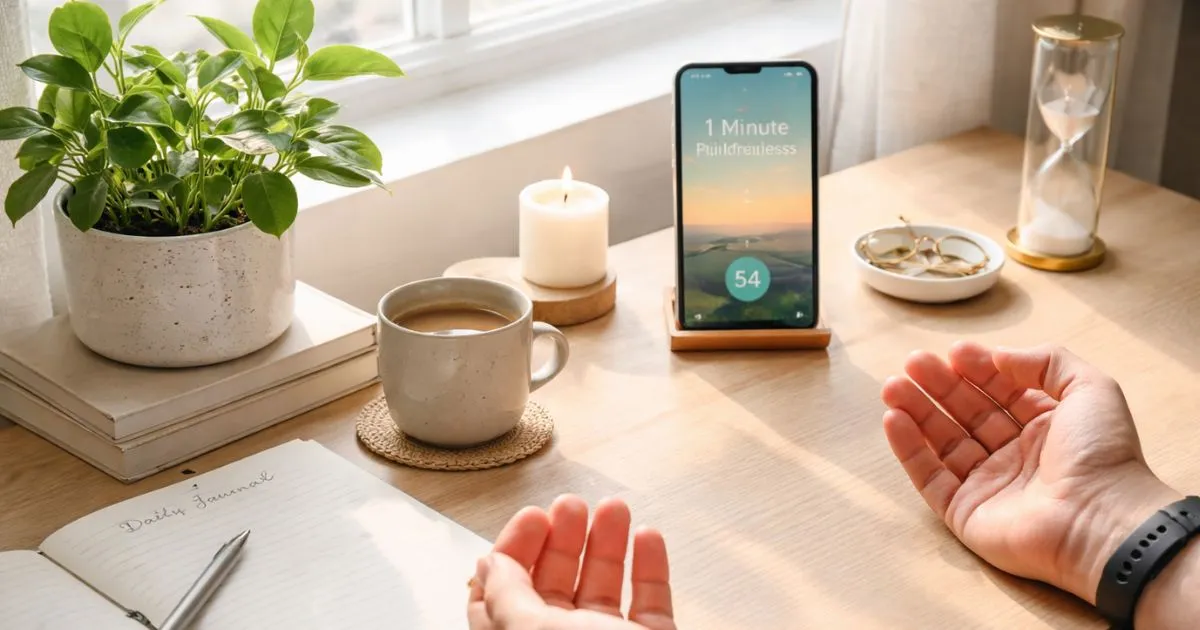
"Mental Fitness" has officially replaced "Hustle Culture" as the ultimate status symbol. As the pace of work accelerates, the most productive individuals aren't those who work the longest hours, but those who protect their cognitive energy. Anxiety isn't just a feeling; it's a productivity killer that clouds judgment and leads to burnout.
Also Read:
Key Statistics & 2026 Trends:
Global Impact: Anxiety-related productivity loss costs the global economy over $1 trillion annually.
Micro-Habit Shift: 2026 research from the Journal of Occupational Health shows that three 5-minute "micro-breaks" are more effective for focus than one 30-minute lunch break.
The "Digital Anchor": 62% of high-performers now practice a "no-screen first hour" to prevent early morning cortisol spikes.
In 2026, the first hour of your day is considered "sacred ground." Checking emails or social media immediately triggers a "reactive" brain state, spiking anxiety before you’ve even had breakfast.
The Habit: Keep your phone in another room. Spend the first 60 minutes hydrating, stretching, or reading.
Benefit: It allows your brain to transition from sleep to focus mode without a dopamine overload.
Continuous work leads to "decision fatigue." Modern wellness experts recommend the 50/10 Rule: 50 minutes of deep work followed by 10 minutes of complete detachment.
The Habit: During your 10-minute break, engage in "analog play"—doodle, solve a physical puzzle, or step outside.
Benefit: Short bursts of play regulate the nervous system and prevent the "mental fog" that sets in by 3:00 PM.
When anxiety hits during a high-stakes meeting, your breathing becomes shallow, signaling "danger" to your brain.
The Habit: Use the 4-4-4-4 Technique. Inhale for 4 seconds, hold for 4, exhale for 4, and hold for 4.
Benefit: It stimulates the vagus nerve, physically forcing your body to exit "fight-or-flight" mode and enter a state of calm focus.
Anxiety often stems from a "negativity bias"—our brain looking for threats. You can rewire this through gratitude.
The Habit: Stack gratitude onto an existing routine. For example, while brushing your teeth, think of three specific things you are grateful for from the previous 24 hours.
Benefit: This shifts your reticular activating system (RAS) to look for opportunities and wins rather than obstacles.
Overwhelm is the biggest trigger for anxiety. When your to-do list feels like a mountain, your brain freezes.
The Habit: Instead of looking at the whole project, ask yourself: "What is the next right action?" Focus only on that one 5-minute task.
Benefit: Completing small tasks releases dopamine, creating a "success loop" that boosts confidence and lowers stress.
Guidelines and data based on UCLA Health 2026 Mental Health Tips, The Guardian 2026 Wellness Guide, and WHO Workplace Well-being Standards. https://www.uclahealth.org/news/article/nine-mental-health-tips-happier-2026
2 weeks ago
2 weeks ago
2 weeks ago