2 days ago
5 days ago
1 week ago
1 week ago
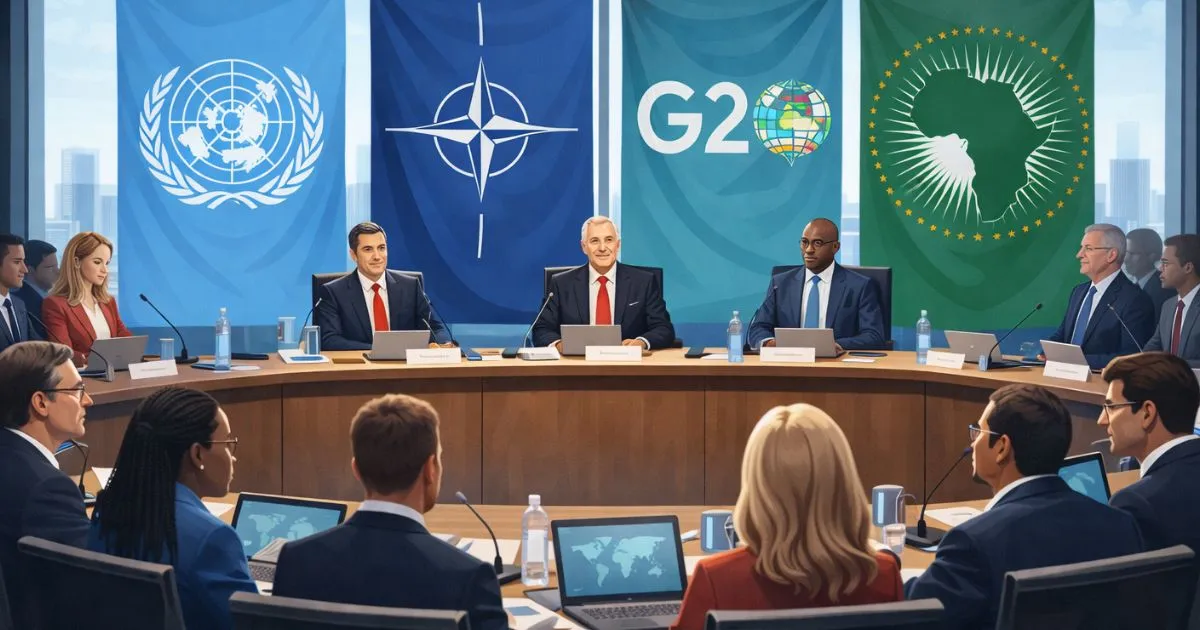
In a world increasingly marked by geopolitical fractures, the role of international organizations has shifted from passive observation to active mediation. As of March 14, 2026, five major entities remain the bedrock of global stability, despite facing unprecedented challenges to their authority and enforcement capabilities.
The UN remains the central pillar of international diplomacy. In 2026, the organization is pivoting toward its inaugural "Peace-building Week" in June to revitalize its conflict-resolution mechanisms.
Focus: Maintaining international peace, humanitarian aid, and sustainable development.
2026 Status: Implementing the "Pact for the Future" to strengthen national prevention strategies.
Official Reference: Report of the Peacebuilding Commission on its 19th Session (Feb 2026)
NATO has solidified its role as the primary security guarantor for the West. Under Secretary General Mark Rutte, the alliance has seen a massive surge in industrial cooperation and defense preparedness in response to the Russia-Ukraine and Middle East conflicts.
Focus: Collective defense and ballistic missile protection.
2026 Status: Allies are pushing toward a goal of 5% GDP spending on defense by 2035.
Official Reference: Speech by NATO Secretary General Mark Rutte at BEDEX 2026 (March 12, 2026)
The G20 under the 2026 U.S. Presidency in Miami is increasingly used to coordinate security policies alongside trade, following a narrow agenda focused on regulatory burdens and energy supply chains.
Focus: Global economic stability, climate finance, and debt restructuring.
2026 Status: The Miami Summit focuses on "Practical Solutions" and unlocking affordable energy.
Official Reference: G20 Miami 2026 Official U.S. Presidency Homepage
The ICJ is currently processing historic cases, including the South Africa v. Israel genocide case, with a record 18 countries (including the Netherlands and Iceland) filing declarations to intervene as of March 2026.
Focus: Settling legal disputes between states.
2026 Status: High-stakes merit hearings for global non-proliferation and genocide conventions.
Official Reference: ICJ Press Release: Iceland and Netherlands file to intervene in Gaza case (March 12, 2026)
The AU’s Peace and Security Council (PSC) is the critical player in stabilizing the continent, particularly in Sudan and Somalia, while focusing on sustainable water availability as its 2026 theme.
Focus: "African solutions to African problems."
2026 Status: Finalizing strategic advocacy for inclusive legal systems at the CSW70 summit.
Official Reference: Outcome Statement - African Union Ministerial Consultation for CSW70 (March 13, 2026)
Research based on the CFR 2026 Summit Lookahead, United Nations Peacebuilding Commission Reports, and NATO Official Briefings (March 2026).
3 hours ago
3 hours ago
14 hours ago