2 days ago
5 days ago
1 week ago
1 week ago
In 2026, news headlines are buzzing with "India’s GDP hits $4 trillion" or "7.6% growth recorded." But for the average person standing in a grocery line, these big numbers often feel like "government talk." In reality, Gross Domestic Product (GDP) is the most important heartbeat of your financial health.
Read our other articles on:
Latest Growth Rate: India’s real GDP is estimated to grow at 7.6% for FY 2025-26, following a methodological revamp (Base Year 2022-23).
Current Milestone: India has officially overtaken Japan to become the world's 4th largest economy.
GDP Per Capita: India’s average income per person is projected to cross $2,800 (Nominal) in 2026.
Status: Fastest-growing major economy globally, beating out the US and China.
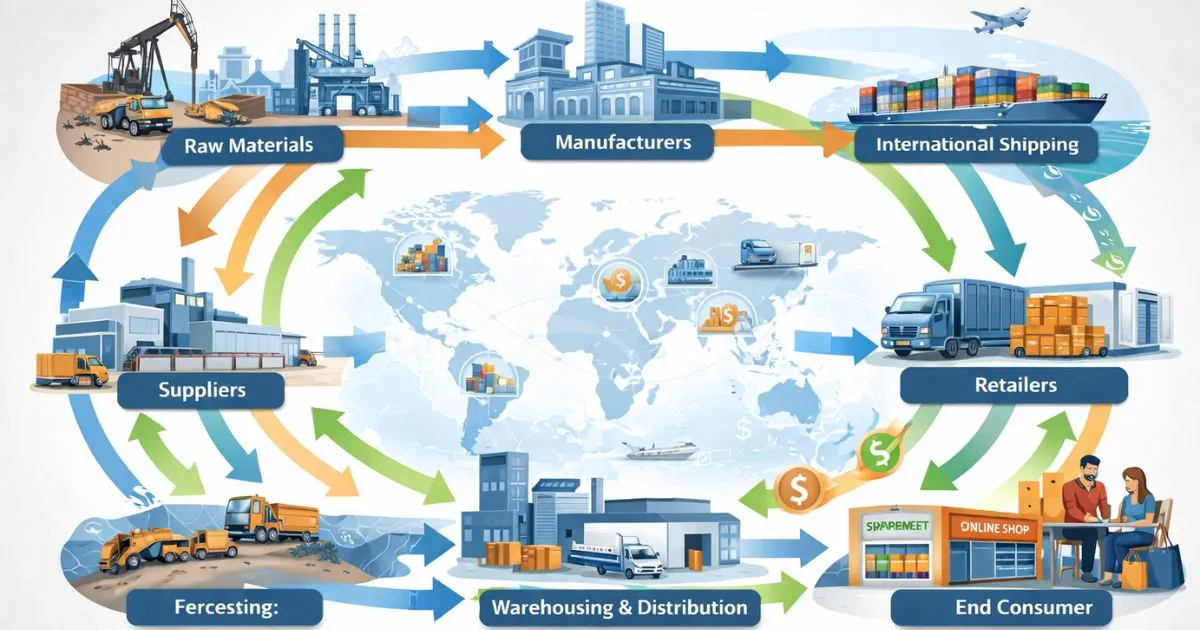
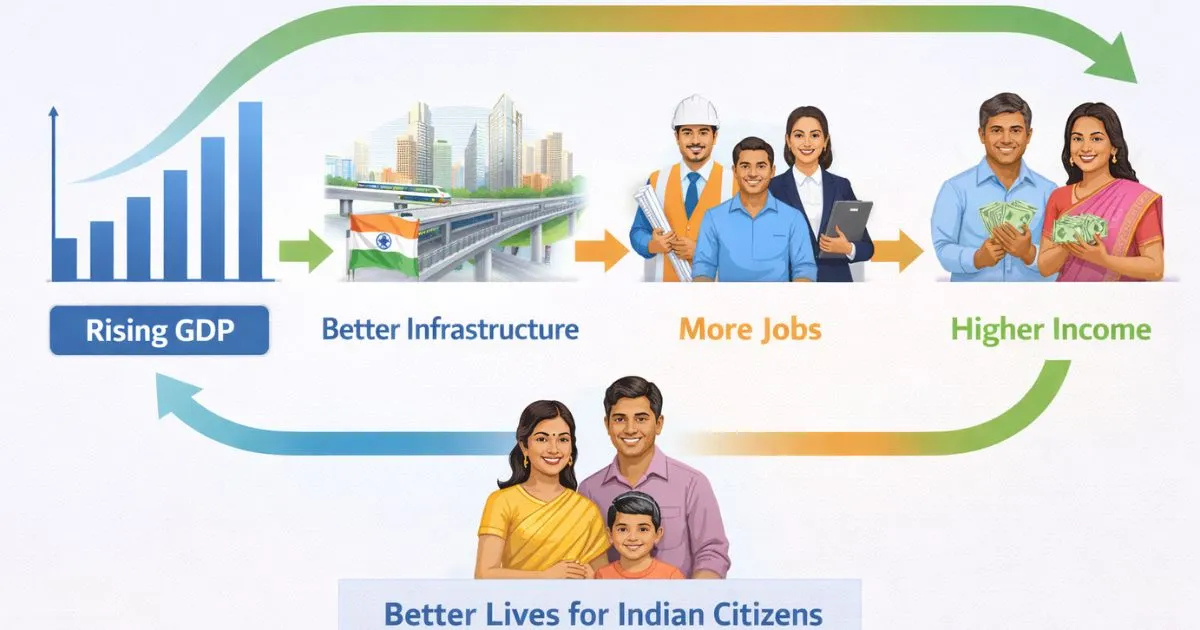
GDP is simply the total value of all goods (like mobile phones) and services (like your internet plan) produced in India. When this number grows, it means the country is "doing more business." Here is how it affects you:
More Jobs: A 7% or higher growth rate indicates that factories and tech companies are expanding. This leads to more hiring for the youth and better job security for workers.
Higher Salaries: When companies make more profit (which drives GDP), they have more room for bonuses and annual increments.
Better Infrastructure: High GDP means more tax collection for the government, which results in the new highways, Vande Bharat trains, and better airports you see today.
While the total GDP tells us the country is getting richer, GDP Per Capita tells us if the average person is getting richer. In 2026, the challenge remains "inclusive growth." Even though the national pie is getting bigger, the goal is to ensure that a larger slice reaches the middle class and rural areas, not just the top 1%.
As India moves toward the $5 trillion mark by 2027-28, the focus is shifting toward the "Manufacturing Hub" status. For you, this means more "Made in India" electronics and a stronger Rupee, which helps control the prices of imported items like petrol and gold.
Data and forecasts based on the Economic Survey 2026, MoSPI First Advance Estimates, and Goldman Sachs Research (March 2026).
3 hours ago
3 hours ago
14 hours ago