2 days ago
5 days ago
1 week ago
1 week ago
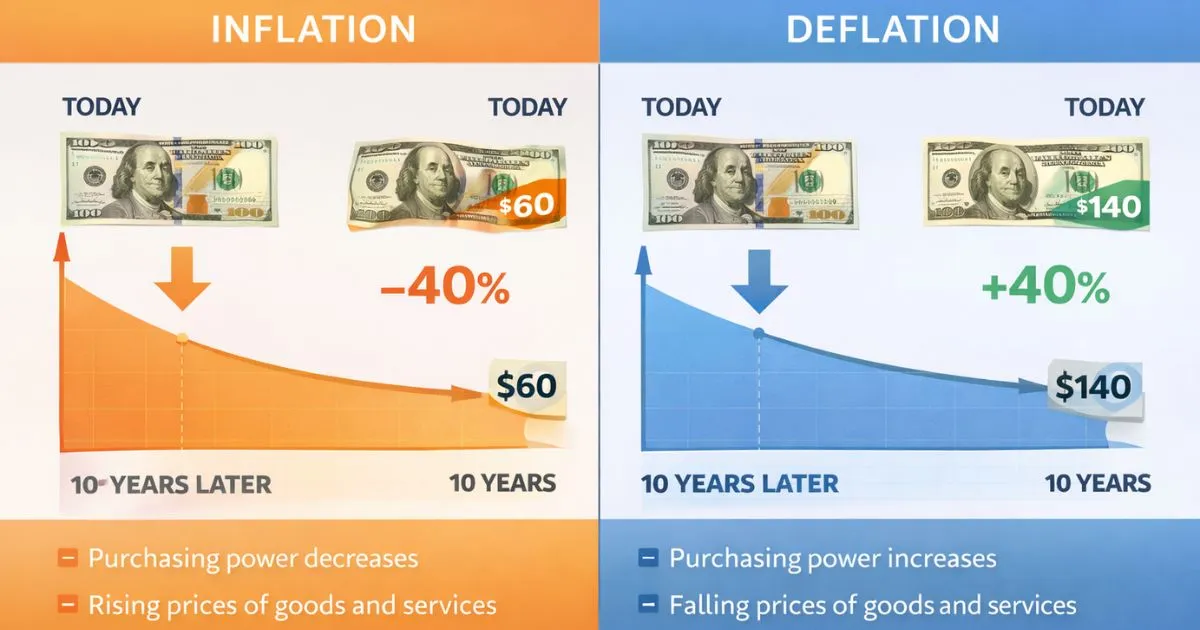
In the world of finance, the value of the ₹100 note in your pocket isn't fixed. Depending on the economic climate in 2026, that same note might buy you a full meal today but only a snack a few years from now. This shift is driven by two powerful forces: Inflation and Deflation.
Inflation is when the prices of goods and services increase across the entire economy. When inflation happens, your purchasing power goes down. This means each rupee buys a smaller percentage of a good than it did before.
Most economists believe a small amount of inflation (around 2% to 4% in India) is healthy. It encourages people to buy now rather than wait, which keeps businesses running and people employed. However, if inflation rises too fast, your savings can lose value quickly.
Deflation is the opposite; it’s when general prices start to fall. While "cheaper prices" sound like a dream for shoppers, it can be a nightmare for the economy.
When prices drop, people stop spending because they wait for even lower prices tomorrow. This leads to lower profits for companies, which can result in pay cuts or job losses. This creates a "Deflationary Spiral" that is very hard for governments to fix.
The impact on your lifestyle depends on where you keep your cash:
| Feature | Inflation | Deflation |
| Purchasing Power | Decreases (Money buys less) | Increases (Money buys more) |
| Impact on Debt | Good for borrowers (Debt feels "cheaper") | Bad for borrowers (Debt feels "heavier") |
| Savings | Loses value if interest is low | Gains value even if kept under a mattress |
| Economic Growth | Usually positive (if moderate) | Usually signals a recession |
To beat inflation, experts suggest moving away from "idle cash" and investing in assets like Equity Mutual Funds, Real Estate, or Gold. These assets historically grow faster than the rate of inflation, ensuring that your wealth doesn't just sit there—it grows.
Data based on 2026 Economic Outlook reports from the Reserve Bank of India (RBI) and the International Monetary Fund (IMF). https://www.rbi.org.in/
3 hours ago
3 hours ago
14 hours ago