2 weeks ago
3 weeks ago
3 weeks ago
4 weeks ago
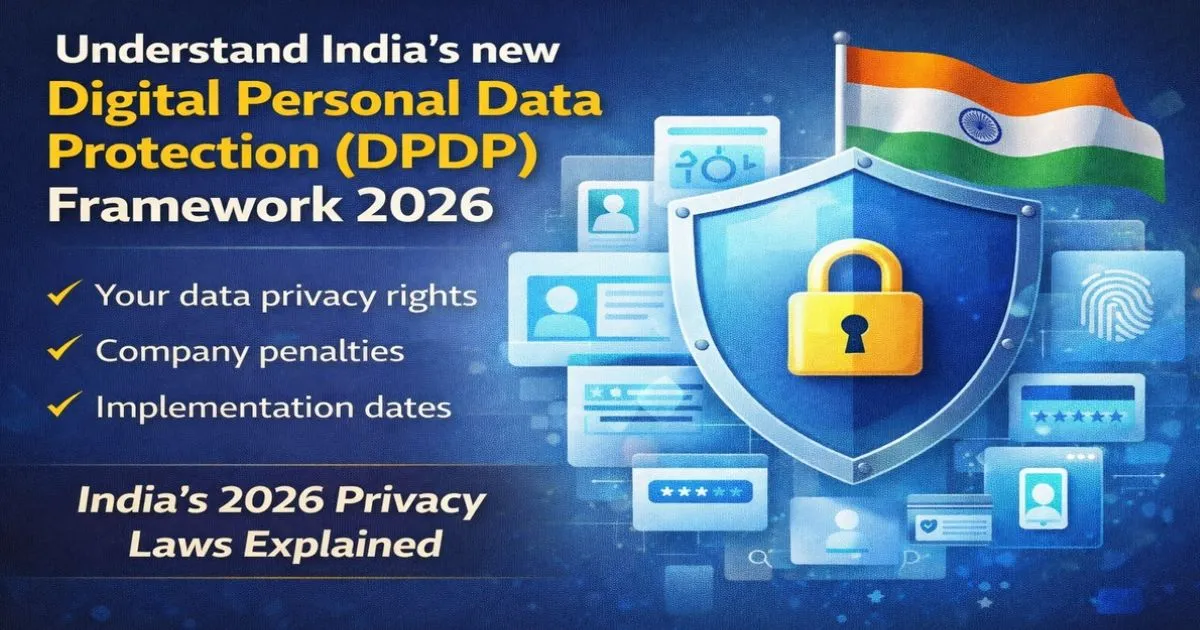
The Indian Government has officially greenlit the 2026 Digital Personal Data Protection (DPDP) Framework. This is a major win for every Indian internet user. In a world where our personal details are often sold or leaked, this new law acts as a powerful "digital lock" for your private information.
The framework focuses on data sovereignty and user consent, ensuring that big tech companies cannot treat your personal information as their own property.
Simple Consent: Companies must provide a clear notice in plain language (not 50 pages of legal jargon) explaining why they need your data.
Right to Correction: If your data is wrong, you have the legal right to ask the company to fix it.
Safety for Kids: Apps cannot track the behavior of minors or show them targeted ads that could be harmful.
Strict Accountability: Companies are now "Data Fiduciaries," meaning they are legally responsible for keeping your data safe.
The rules come into force starting February 2026. Grace Period for small businesses have until December 2026 to update their systems.
| Milestone | Expected Date | Status |
| Framework Approval | Feb 2026 | Completed |
| Data Protection Board Setup | June 2026 | Upcoming |
| Full Compliance Deadline | May 2027 | Upcoming |
If a company fails to prevent a data breach, the consequences are severe. This ensures that privacy is not just a policy, but a priority.
Failure to protect data: Up to ₹250 Crore.
Failure to notify breach: Up to ₹200 Crore.
Breach of children's data: Up to ₹150 Crore.
Think of it as a "digital shield." Whether you are shopping online, using social media, or applying for a service, this law ensures that your private details—like your name, phone number, and location—are not misused.
2 weeks ago
2 weeks ago
2 weeks ago